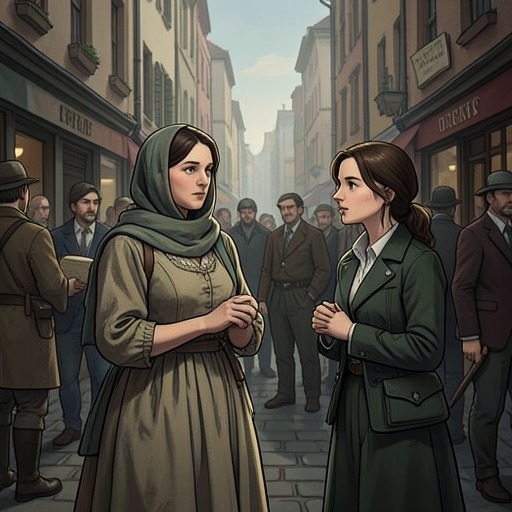
Lula Landry and Marlene Higson’s relationship
The Cuckoo's CallingLula Landry’s relationship with Marlene Higson begins in the search for the birth family from whom Lula had been separated through adoption. Lula continued to see Marlene despite the pain and publicity surrounding their connection; she was also eager to learn about her biological father, an interest that brought her search into conflict with the Bristow household and its history of loss.
Discovery and the search for origins
Lula’s adoptive mother, Lady Bristow, told Cormoran Strike that she and her husband, Alec Bristow, had known nothing of Lula’s background when they adopted her, or at least that Alec had never told her anything he might have known. Lula later found her birth mother. Lady Bristow remembered that this discovery became public and that Lula kept seeing Marlene, although she believed Marlene had never wanted Lula. Her account conveys the family’s hurt, but it is Lady Bristow’s recollection rather than a full account of Marlene’s intentions or of the meetings themselves.
Lula’s interest in her origins extended beyond identifying her mother. Ciara Porter said that finding her biological father would have been Lula’s dream and that Lula often talked about it. When Marlene told Lula that her father was African, Lula became excited. Guy Somé, who disliked Marlene and distrusted what she said, thought the claim was false and wanted to protect Lula from the disappointment he expected. The contrast between Lula’s hope and Guy’s skepticism leaves the father’s identity as a matter of uncertainty at this point in the investigation.
Adoption, illness, and family conflict
The search placed additional strain on Lula’s relationship with her adoptive family. Lady Bristow said that John Bristow and Tony Landry were very angry that Lula had begun looking for her biological mother while Lady Bristow was gravely ill. Her tumor was already advanced, and she was undergoing chemotherapy. She recalled that John supported her by driving her to hospital and staying with her during the worst periods, while she felt that Lula’s attention was elsewhere. Lady Bristow also admitted that, after losing Charlie Bristow, she may have spoiled Lula by trying to give her everything.
This account makes the search a conflict of competing attachments rather than a simple rejection of the adoptive family. Lula’s pursuit of her birth mother and father mattered to her, while the illness and old grief within the Bristow household gave that pursuit painful meaning to those around her. The evidence establishes the family’s anger and Lady Bristow’s sense of hurt; it does not establish that Lula intended her search as a repudiation of her adoptive mother.
Privacy, trust, and the father’s hidden history
According to Ciara, Lula became wary after Marlene began selling stories about her. Lula asked whether Ciara had told anyone that she and Evan Duffield had reunited, a question Ciara took as an instance of Lula’s growing suspicion about confidences reaching the press. The episode connects the damage to Lula’s privacy with her relationship to Marlene: the birth mother’s public disclosures made Lula more guarded even with a close friend.
A later conversation with Jonah Agyeman clarified why Lula’s search for her father remained so uncertain. Jonah said his father had told him, shortly before dying, that a white woman named Marlene might have become pregnant by him, but that he had never been sure the pregnancy was real. He had kept this from his wife and told Jonah not to upset her; he also did not know whether the child had been born. Jonah said he had not planned to tell Lula about the possibility until she unexpectedly contacted him. This disclosure confirms a possible half-sibling connection and gives context to Lula’s interest in her biological father, but it does not by itself verify every part of Marlene’s account.
Significance
The relationship brings the novel’s investigation of family identity into contact with its inquiry into secrecy and public exposure. Adoption gives Lula a loving but complicated place in the Bristow family; her search for Marlene and her possible biological father opens a separate, partly concealed history. At the same time, Marlene’s reported sale of stories turns a private search into a source of publicity and mistrust. The evidence is deliberately uneven: Lady Bristow speaks from grief and illness, Ciara recalls Lula’s hopes and suspicions, Guy interprets the father story protectively, and Jonah supplies a family secret inherited from his father. Together, their accounts show why Lula’s connection to Marlene mattered without resolving every claim about her origins.